ilaerg

How do you concretize the definition of "functional art" for ilaerg? How do you strike a balance between an object being viewed as a work of art and being used in daily life?
We can form emotional connections with any object. Not just with things that are meaningful to us, but also with things that everyone needs. Some we simply admire, while others exist because they make our lives easier. I explore how this connection takes shape around daily rituals, and the balance between function and form develops along the way. The starting point isn't always the same. Sometimes I prioritize just one concept and start with that, sometimes another. The point where the design is complete is when I can achieve both.
In ilaerg's design language, forms appear very organic and fluid. How did such a simple and calm aesthetic develop within the chaotic structure of Istanbul?
I was born and raised here. I still live here. Istanbul is a multifaceted city; every aspect of it nourishes or pulls you away in a certain way. It's up to us to sift through these elements. Therefore, I don't see the simplicity and calmness of my work as something that develops despite Istanbul. Perhaps I choose to see those aspects of Istanbul.
For you, is aesthetic perfection or filling a functional gap more important for an object to be considered "complete"?
Aesthetics is an important starting point for me. However, the definition of "complete" emerges in the relationship with people. You can design a very beautiful object, but if it doesn't find a place in daily life, it remains incomplete. I try to proceed with the awareness that a design that doesn't fully meet its function cannot be integrated into the user's life. It is very important that my designs can be used comfortably and actively in daily life. In your words, if a piece that has achieved aesthetic perfection can become a part of the user's daily life, then I have achieved my goal.
In your work, the texture of the material is prominent. How would you define your relationship with raw materials? Does the material guide the form, or do you push the material to achieve the form you envision?
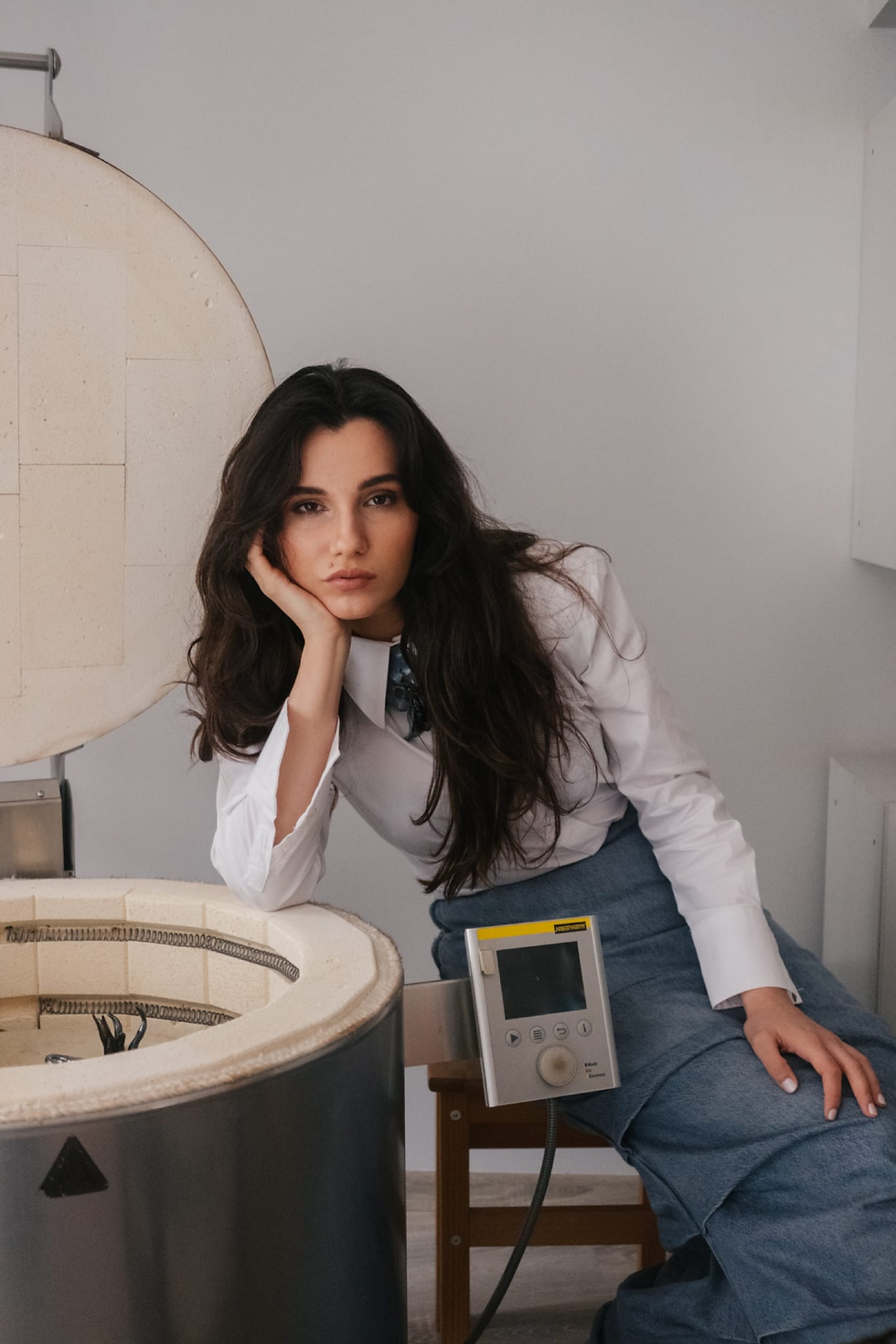
I would say I try to push it. Clay is a material that allows you to shape it, but it's not one to be stubborn about. In some of my designs, I pushed the material hard, and the clay accepted it (!). In others, I had to back down, to give up on certain things. Ultimately, achieving harmony with the material is important. When working with clay, the first thing the body desires is balance. If the clay rejects something, bends, or cracks, it signals a lack of balance in the form; it warns you. Of course, sometimes these cracks or what we might call flaws can add aesthetic value to the piece. This is also a kind of harmony. However, I like to design by considering how the material will react during the sketching stage. This pushes you to think two or three steps ahead. When repeated, at the end of the day, you find yourself immersed in a very nourishing and developing practice. You know that question, "Should form follow function, or function follow form?"; in this profession, they all follow the clay :) Still, keep pushing, because it's impossible to test the limits without pushing.
How did a prestigious achievement like the iF Design Award influence the brand's future design motivation?
Although I do my work because I love it and am passionate about it, at the end of the day, no matter how personal and solitary the production, there is a human connection. The collection receiving this award inevitably gave me a sense of validation and belonging. It allowed me to chart a clearer course for how I can position the brand.
ilaerg objects generally have a "quiet" but powerful character. What kind of feeling do you aim for these objects to evoke in homes?
I like my designs to be objects that integrate into people's lives. Most importantly, I value them acquiring personal meanings over time. They may attract attention with their forms at first glance, but it's more important to me that they become a natural part of everyday life over time. I enjoy them accompanying a morning coffee, a crowded dinner table, or an ordinary moment spent alone at home. Perhaps that's the feeling I hope they create, a sense of belonging to the user.
Should we expect to see new materials or intersections with different disciplines (architecture, fashion, etc.) in future collections?
I recently collaborated with a jewelry brand. I contributed two stoneware designs to Bywayof's Riviera summer collection. I really enjoy working with different disciplines and collaborating with other brands. Such partnerships broaden my perspective and practice, and allow me to reach different audiences. Therefore, yes, as long as I can continue doing my work, I am always open to intersections with different disciplines and materials.
If you had to describe ilaerg in three words, what would those words be?
Form, idea, observation.


Comments