Basakla

Designed in London | Does the duality of "Crafted in Istanbul" create a conflict of identities or an enrichment in the creative process? How do London's rule-breaking avant-garde vision and Istanbul's impeccable textile discipline reconcile at the design table?
London is a very important stepping stone for us to expand globally. However, we don't define our design philosophy solely through London.
When I first came to London, I experienced a serious cultural shock because there's a very avant-garde fashion market here, and the second-hand culture is very widespread. Although this market doesn't quite fit Başak's style, creative fields, from theatre to visual arts, are extremely rich. London is truly an inexhaustible source of inspiration for creativity across all art forms. Turkey, on the other hand, stands out globally with its fabric quality and production discipline. The coming together of these two worlds creates a powerful harmony rather than a conflict for us. When the free space of creativity and the understanding of high-quality production combine, a very special balance emerges.
Your visual language and the silhouettes in your designs have a very clear, graphic, and sharp stance. These structured forms, in line with today's "effortless and fluid" clothing trend... How do you create this hybrid style?
Actually, there are two different approaches here. Basakla isn't a brand that tries to look completely effortless and simple. Our focus has always been on elegance. However, we interpret this not as an unattainable elegance, but as "effortless elegance." Our goal is to create the star piece of the outfit. We want people to feel powerful and stylish with Basakla designs, even when they prefer comfortable pieces in their daily lives. For example, even when you combine a Basakla jacket with sweatpants, you can create an effortless but effective look. We actually design that elegance beforehand and present it to the user.
You're participating in huge arenas like the Paris Fair on your way to becoming a global brand. When was that turning point when you went beyond being just a "local success story" and started speaking a global fashion language?
Honestly, from the first day I founded the brand, my goal was to go global. I always dreamed of selling abroad and being present in the international market. Being at fairs like Paris, making direct contact with buyers from different countries, and opening up to new markets through them has been a very valuable experience for us. In this sense, I can say that the turning point began with the trade fairs. Besides that, we have different goals and plans on the retail side as well. Time will tell where the brand will take us in the future.
In your collections, we see masculine tailoring elements adapted to the women's wardrobe in a very refined way. When building this strong and grounded "new woman" silhouette, is your inspiration from icons of the past or from today's street culture?
I don't approach design solely through feminine and masculine concepts. One of my favorite things in design is bringing together seemingly contradictory elements. Of course, I want to create a strong female silhouette. But what's most important to me is that the person feels good when wearing the design. When creating every detail of a piece, I imagine the feeling it will ultimately create. Therefore, my inspiration doesn't come from a single era or culture; it comes from a fusion of different worlds.
In fashion, "timelessness" is no longer just a long-lasting style, but also an ethical stance. With Basak, how can you maintain the aesthetic lifespan and the technical lifespan (fabric quality, workmanship) of a design on the same line? Does it embrace the perception of timelessness?
While timelessness seems very easy as an idea, it's quite a difficult subject on the production side. My primary goal is to create a truly timeless piece. So much so that years later, when your daughter sees it, she'll want to wear it. However, while doing this, I don't want to be confined to today's specific trends or temporary vintage influences. That design should retain its meaning in every era. In line with this approach, we produce in limited quantities and use high-quality fabrics. Our craftsmen in the workshop also take great care in each piece, as if they were sewing a wedding dress. At the heart of our understanding of luxury is not ostentation; it's quality, craftsmanship, and longevity. Although it's sometimes difficult to convey this in the digital world, we try to make this value visible in our social media communication.
While your design processes take shape in London, during the workshop phase in Istanbul, the question arises: "Will this piece lose its soul when it goes into production?" Which material or cut caused you the most anxiety and proved most challenging?
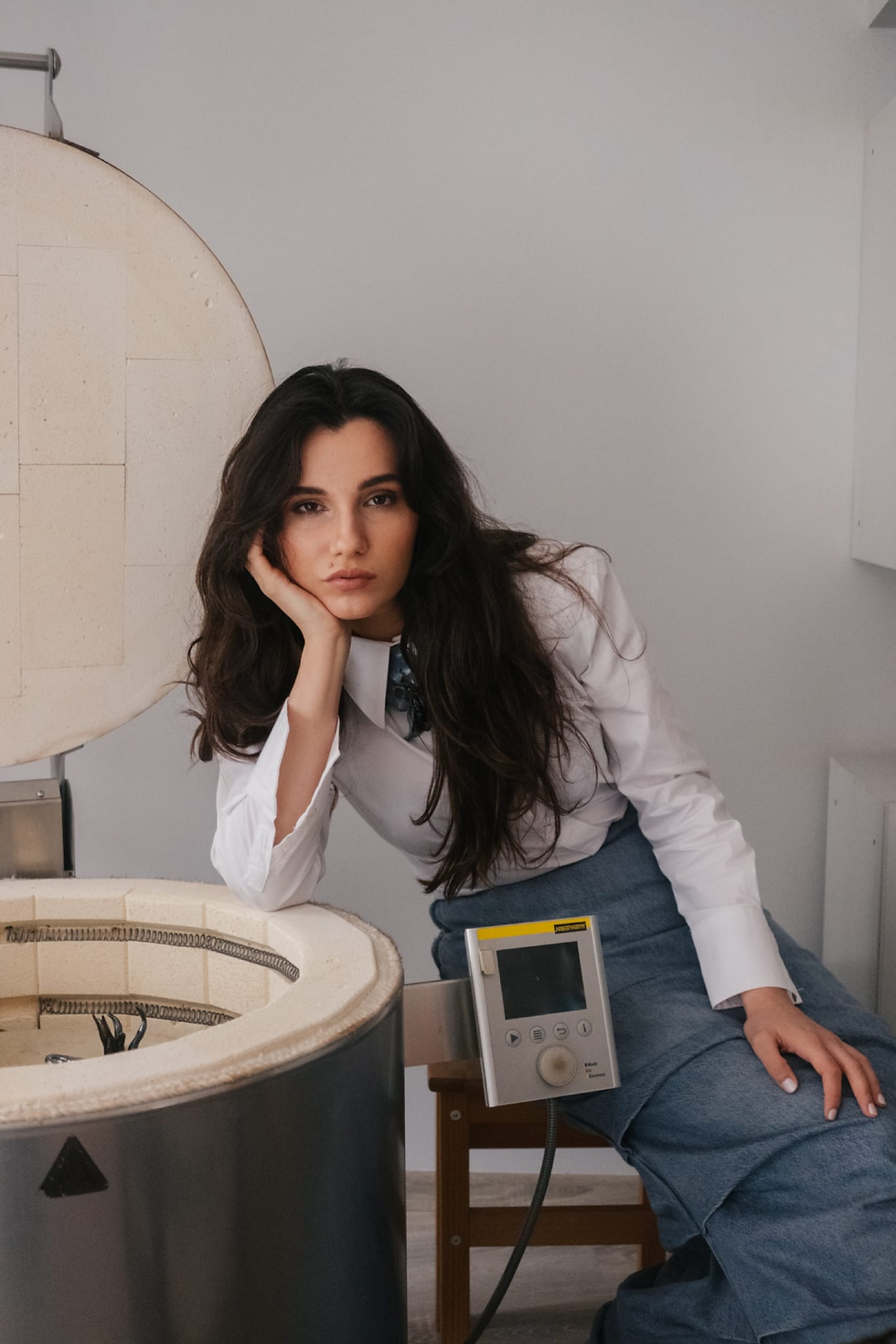
The most challenging material in this regard is definitely denim. Because the washing processes applied to denim are the most important process directly affecting the final appearance of the product. The result you envision during the design phase may not always be exactly the same as the result after production. Unexpected changes can occur, especially in terms of color tones and surface effects. Since we aim for very high quality standards in the denim category, this process can sometimes be quite demanding.


Comments